
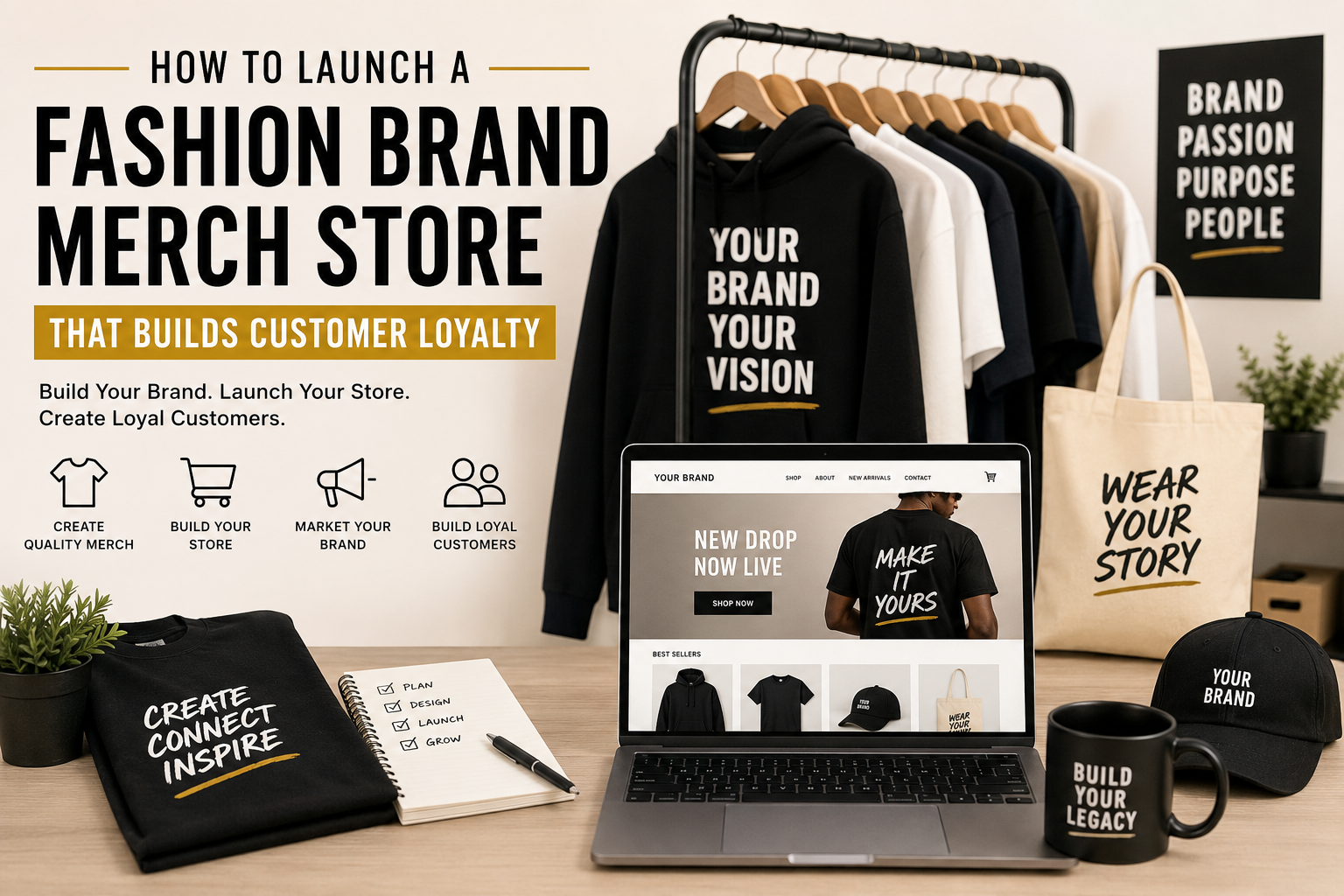
A fashion brand merch store can do much more than sell shirts, hoodies, hats, and accessories. When it is built correctly, it becomes an extension of your brand, a source of recurring revenue, and a powerful way to create lasting relationships with customers.
Why a Fashion Brand Merch Store Matters
Customers do not always buy merchandise simply because they need another piece of clothing. They often buy because they want to express an identity, support a business, join a community, or feel connected to a story.
This is why successful fashion merchandise is about more than placing a logo on a basic T-shirt. Your products should reflect the personality, values, and visual style of your fashion brand.
A well-planned merch store can help your business:
- Increase brand awareness
- Generate additional online revenue
- Create stronger customer relationships
- Encourage repeat purchases
- Turn customers into brand ambassadors
- Test new fashion ideas with less risk
- Build a recognizable lifestyle around your brand
Step 1: Define the Identity of Your Fashion Brand
Before you create products, you need to understand what your fashion brand represents. Strong branding gives your merchandise a consistent direction and helps customers recognize your style.
Begin by identifying your brand personality. Is your fashion brand bold, luxurious, playful, rebellious, minimalist, artistic, athletic, sustainable, or nostalgic?
Your brand identity should guide every decision, including:
- Your logo and typography
- Your color palette
- Your product photography
- Your packaging
- Your social media content
- Your product descriptions
- Your customer service style
Step 2: Understand Your Target Customer
A successful fashion brand merch store is designed around a specific customer. Trying to appeal to everyone often results in products that feel generic and forgettable.
Consider the age, lifestyle, interests, budget, fashion preferences, and shopping habits of your ideal customer.
Ask questions such as:
- What styles does the customer already wear?
- What colors are most appealing to them?
- Do they prefer subtle branding or bold graphics?
- Are they looking for affordable basics or premium fashion pieces?
- Where do they spend time online?
- What values or causes matter to them?
The more clearly you understand your audience, the easier it becomes to create custom merchandise that customers are excited to wear.
Step 3: Choose the Right Products for Your Merch Store
Many fashion brands make the mistake of launching too many products at once. A smaller, focused collection is often easier to manage and more effective for creating a clear brand identity.
Good introductory merchandise may include:
- Custom T-shirts
- Premium hoodies
- Sweatshirts
- Hats and beanies
- Tote bags
- Socks
- Jackets
- Phone cases
- Mugs and lifestyle accessories
Start with products that match the lifestyle of your target audience. A streetwear brand may focus on oversized shirts, hoodies, and caps. A wellness fashion brand may choose soft sweatshirts, leggings, tote bags, and reusable bottles.
Product selection should always support the larger story of the brand.
Step 4: Create Merchandise People Actually Want to Wear
A logo alone does not always make a product desirable. Customers are more likely to buy merchandise when the design feels fashionable, meaningful, wearable, and connected to a larger idea.
Effective merch designs may include:
- Memorable slogans
- Original illustrations
- Limited-edition artwork
- Signature patterns
- Subtle embroidered logos
- Bold back graphics
- Seasonal collections
- Collaborations with artists or creators
Think about how the customer will style the product. A successful piece should look good as part of a complete outfit, not just as a promotional item.
Balance Branding and Fashion
Some customers love large logos, while others prefer discreet branding. Offering a mix of bold and subtle designs can help you serve different style preferences without losing your brand identity.
Step 5: Decide How You Will Produce Your Merchandise
There are several ways to produce fashion brand merchandise. The best option depends on your budget, order volume, quality requirements, and business goals.
Print-on-Demand
Print-on-demand allows products to be created after a customer places an order. This can reduce upfront inventory costs and make it easier to test new designs.
This method may be a good choice for a new fashion brand, creator, influencer, or small business that wants to start with less financial risk.
Bulk Inventory
Ordering merchandise in bulk can provide more control over materials, printing, labels, packaging, and fulfillment. It may also reduce the production cost per item when order quantities are large.
However, bulk inventory requires storage space and a larger upfront investment.
Private Label Production
Private label production allows you to create products with custom labels, tags, packaging, and other branded details. This option can make your merchandise feel more like a complete fashion collection.
Regardless of the production method, always order samples before launching. Check the fabric, fit, print quality, color accuracy, stitching, packaging, and overall customer experience.
Step 6: Price Your Products for Profit and Value
Product pricing should cover more than the cost of the blank product. You also need to consider printing, embroidery, packaging, transaction fees, advertising, shipping, returns, website expenses, and your desired profit margin.
Customers evaluate value based on several factors:
- Product quality
- Design originality
- Brand reputation
- Packaging
- Exclusivity
- Customer service
- Overall shopping experience
Competing only on low prices can make it difficult to build a strong fashion brand. Instead, focus on communicating why your merchandise is worth purchasing.
Step 7: Build a Professional Online Merch Store
Your website should make it easy for visitors to understand your fashion brand, explore your products, and complete a purchase.
Every product page should include:
- Clear product photographs
- Multiple views of the merchandise
- Accurate size information
- Fabric and material details
- Care instructions
- Shipping information
- Return and exchange policies
- A persuasive product description
Your site should also be mobile-friendly because many customers will discover your fashion merchandise through social media and shop using a phone.
Create SEO-Friendly Product Pages
Search engine optimization can help customers discover your products through online searches. Use descriptive page titles, original product descriptions, image alt text, internal links, and keywords that accurately describe each item.
For example, instead of naming a product simply “Black Shirt,” use a more descriptive title such as “Oversized Black Graphic T-Shirt for Streetwear Fans.”
Step 8: Launch with a Focused Marketing Campaign
A merch store launch should feel like an event. Build anticipation before the products become available.
Your launch campaign may include:
- Behind-the-scenes design previews
- Countdown posts
- Email announcements
- Early access for subscribers
- Influencer partnerships
- Launch-day discounts
- Limited-edition products
- Customer giveaways
- Short promotional videos
Use storytelling to explain what inspired the collection. Customers are often more interested when they understand the meaning behind a design.
Step 9: Use Merchandise to Build Customer Loyalty
Customer loyalty develops when people consistently receive value, recognition, and a positive experience from your brand.
A fashion brand merch store can strengthen loyalty through:
- Rewards for repeat purchases
- Exclusive subscriber discounts
- Early access to new collections
- Birthday offers
- Member-only products
- Personalized thank-you notes
- Surprise gifts in selected orders
- Referral rewards
Even small gestures can make customers feel appreciated. When customers feel recognized, they are more likely to return and recommend your fashion brand to others.
Step 10: Encourage Customers to Share Your Brand
Customers wearing your merchandise can become one of your most effective forms of marketing. Encourage buyers to share photographs and videos of themselves using your products.
You can motivate customer participation by:
- Creating a branded social media hashtag
- Featuring customer photos on your website
- Reposting customer content
- Offering monthly photo contests
- Providing discount codes for referrals
- Highlighting loyal customers in newsletters
User-generated content provides social proof and helps potential customers imagine how your products might look in real life.
Step 11: Use Limited Drops to Create Excitement
Limited merchandise drops can create urgency and make customers feel that they are gaining access to something special.
A limited drop might include:
- A seasonal color
- A special anniversary design
- A small artist collaboration
- A numbered product release
- A holiday collection
- A product available for only a few days
Limited availability should be genuine. Customers may lose trust when a brand repeatedly claims that products are nearly sold out when they are not.
Step 12: Measure What Is Working
After your merch store launches, review your sales and customer behavior. This information can help you improve future products and marketing campaigns.
Important measurements include:
- Best-selling products
- Average order value
- Website conversion rate
- Repeat purchase rate
- Cart abandonment rate
- Email signups
- Traffic sources
- Product return rates
- Customer reviews
Pay attention to both numbers and customer feedback. A product with strong sales but frequent complaints may need improvements in sizing, fabric, packaging, or fulfillment.
Common Mistakes to Avoid
Launching a fashion brand merch store can be exciting, but rushing the process may lead to avoidable problems.
Common mistakes include:
- Using low-quality products
- Launching without ordering samples
- Copying popular designs instead of developing an original style
- Offering too many products too quickly
- Ignoring sizing information
- Using poor product photography
- Failing to explain shipping times
- Neglecting customer service
- Pricing products without calculating total costs
- Changing the brand style too frequently
A smaller collection of high-quality, carefully designed products is usually more effective than a large collection with no clear direction.
How a Merch Store Turns Customers into a Community
The strongest fashion brands give customers something to participate in. Merchandise becomes a symbol of shared interests, attitudes, values, and experiences.
Customers may initially discover your business because of a product, but they often remain loyal because of the community and emotional connection surrounding the brand.
Build that connection by consistently sharing your story, recognizing your customers, listening to feedback, and creating products that reflect the identity of your audience.
Frequently Asked Questions About Fashion Brand Merch Stores
How much does it cost to start a fashion merch store?
Startup costs vary depending on your production method, website platform, product selection, packaging, photography, and advertising. Print-on-demand can reduce upfront inventory costs, while bulk production usually requires a larger initial investment.
What products should a new fashion brand sell first?
Many new brands begin with a focused collection of T-shirts, hoodies, sweatshirts, hats, and tote bags. Choose products that match your audience and brand identity.
Can a merch store build customer loyalty?
Yes. Merchandise can create a stronger emotional connection between customers and a brand. Loyalty can grow through quality products, exclusive releases, rewards, excellent service, and a consistent brand experience.
Should a fashion brand use print-on-demand?
Print-on-demand can be useful for testing designs and starting with less inventory risk. However, brands should carefully evaluate product quality, printing options, shipping times, packaging, and profit margins.
How can a fashion merch store get more customers?
A merch store can attract customers through search engine optimization, social media content, email marketing, influencer partnerships, limited releases, referral programs, customer photos, and helpful fashion content.
Final Thoughts
Launching a fashion brand merch store is not only about selling custom apparel. It is about creating products that represent your brand and give customers a reason to stay connected.
Start with a clear identity, understand your audience, choose quality products, build a professional online store, and create a memorable customer experience. As your customers wear and share your merchandise, your brand can gain visibility, credibility, loyalty, and long-term growth.
The most successful fashion merchandise feels like part of a lifestyle. When customers are proud to wear your products, they are not simply making a purchase—they are helping your fashion brand grow.
Grow Your Fashion Brand with a Professional Merch Store
FashionBrandMerch.com helps fashion businesses, creators, influencers, and entrepreneurs turn their ideas into branded merchandise customers will love.